

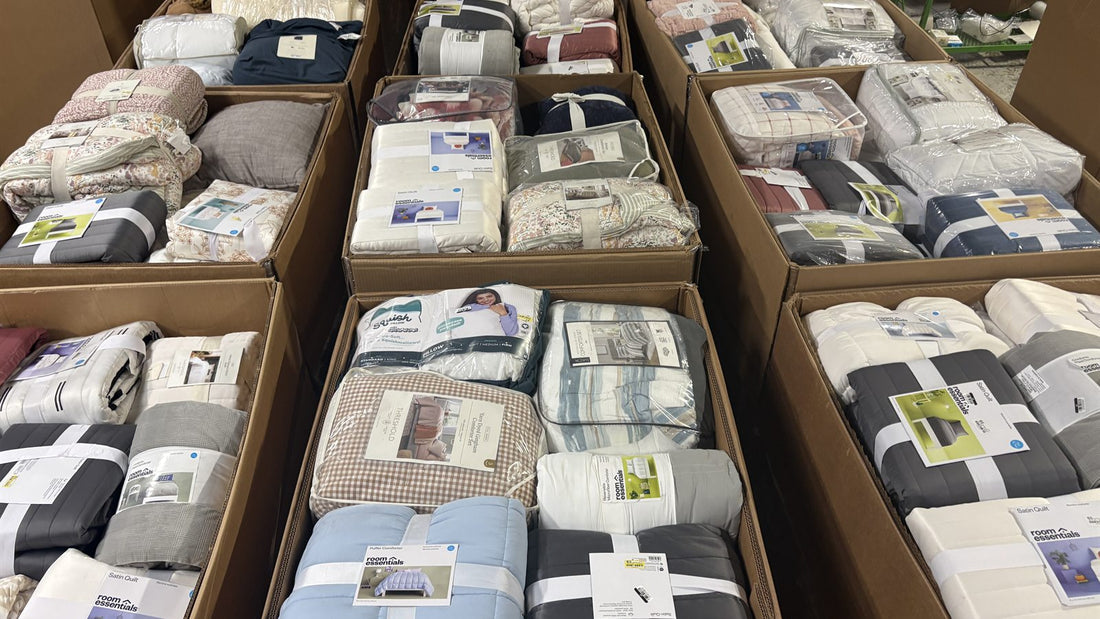
December returns intake: staffing, SLAs and disposition rules
Share
Holiday returns will reach own-warehouse sellers in two waves: a first surge in the last days of December and a longer tail through January. This article is for brands, retailers, distributors and 3PL owners who receive returns and unsold seasonal stock into their own building. Three things to settle before Thanksgiving on November 26: how many intake hours you need, what intake service levels to set, and which disposition rules keep returned units from turning into next year's excess inventory.
What the November 2026 data says about labor and space
The October 2026 Logistics Managers' Index (released November 3, 2026) shows Inventory Levels at 66.9, the strongest expansion since September 2022, and Inventory Costs at 88.8, the highest reading since March 2022. Warehousing Capacity stayed in contraction at 43.5, with firms of fewer than 1,000 employees at 40.0 against 48.3 for larger firms, and Warehousing Prices accelerated to 80.7. The report adds that several logistics providers are pushing seasonal hiring back to mid-November to limit labor cost.
Challenger, Gray & Christmas (November 5, 2026) counted 470,400 announced seasonal hiring plans through October, up 26% from 2025 but concentrated among five companies, with Amazon at 300,000 and UPS at 100,000. The firm calls it a "low-fire environment": employers keep existing staff and add short-term seasonal roles instead of permanent headcount. NRF's holiday forecast (October 15, 2026) expects retailers to hire between 325,000 and 375,000 seasonal workers, in line with last year's estimated 356,000.
Size the intake job before you size the team
Returns volume follows units sold, not revenue. The numbers below are an illustration with every assumption stated.
Step 1: Estimate returned units
A SupplyChainBrain column by ReBound Returns (October 6, 2026), citing Digital Commerce 360, reports that consumers returned 14% of what they bought between November 1 and December 31, 2025, and that close to one in seven of those returns landed in the final six days of December. If you expect to sell 60,000 units in November and December and your category tracks 14%, plan for about 8,400 returned units, roughly 1,200 of them between December 26 and 31.
Step 2: Convert units into labor hours
Assume six minutes per unit for receiving, scanning, Inspection, grading and put-away, or ten units per labor hour. That is an assumption, not a published benchmark; time your own process for a week. On that basis 8,400 units need 840 labor hours. Spread over the 24 working days from Monday, December 28, 2026 through January 29, 2027 (January 1 is a Friday holiday), that is 35 hours a day, or roughly four full-time people on intake. The first wave is denser: 1,200 units across the four working days of December 28 to 31 is 300 units and 30 labor hours a day.
Step 3: Price the processing
ReturnPro's July 28, 2026 cost guide cites Statista data, via nShift, putting processing at $10 to $40 per returned item. On 8,400 units that is $84,000 to $336,000 before freight and any loss on resale. Units that need manual decisions are the ones most likely to sit near the top of that range.
Set three intake service levels and staff to them
An intake SLA is a promise your warehouse makes to your finance team. Three measures are enough.
| Measure | Suggested target | Why it matters |
|---|---|---|
| Dock to scanned | Same or next business day | Unscanned returns are invisible to inventory, cash forecasting and fraud checks. |
| Scanned to graded | Within 2 business days | The grade decides the channel; until it exists the unit is neither sellable nor excess. |
| Graded to disposition decision | Within 5 business days | ReturnPro (July 2026) notes that returns waiting for manual decisions lose value every day; a decision date caps that. |
Staffing follows the SLA. If the two-day grading target cannot be met in the December 28 to 31 window, the options in order of cost are: cross-train outbound pickers for intake once outbound volume drops after December 23, add a temporary crew for two to three weeks, or accept a longer SLA for low-value categories only. ReBound's column makes the same point: in peak, labor that can move between outbound and reverse work beats deep specialization.
- Post the SLA and daily unit count by the returns dock.
- Track backlog in units, not cartons.
- Name one person to approve exceptions and one to release inventory to a channel.
Disposition rules that keep returns from becoming excess inventory
Grading without a routing rule creates a better-labelled backlog. ReturnPro's guide uses four grades, from new or like-new through damaged or incomplete, and ties each grade to a defined next step. For an own-warehouse seller the rule set can be short.
Rules by grade
- Grade A, sealed or like new: return to stock within the grading SLA; count it as available only after put-away is confirmed.
- Grade B, opened, complete, functional: sell through your own outlet or open-box channel, with a review date 30 days after grading; units still unsold then move to the bulk group.
- Grade C, cosmetic or packaging damage: straight to the bulk group unless a repack costs less than the expected price gap.
- Grade D, damaged, incomplete, recalled or unsafe: quarantine. Recalled or unsafe units are never resold; the rest go to parts recovery, recycling or disposal under your policy.
Rules by time
Add a calendar trigger on top of the grade trigger. Anything graded B or C still on the floor on February 2, 2027, five weeks after the first wave, joins the unsold seasonal stock in one bulk submission. B-Stock's November 3, 2026 playbook describes the same January pattern: returns and unsold seasonal stock arrive together, capacity tightens and capital stays tied up until the inventory leaves the building.
What the bulk submission needs
By grade and SKU: quantity, condition notes, packaging state, location, total retail value, target sales price and any sales restrictions. Keep returns and unopened overstocks on separate lines; buyers tend to price a mixed line at the lower condition. A few photos per pallet shorten the review.
Where REMEX fits
REMEX buys excess inventory, overstocks and customer returns from businesses that hold stock in their own warehouse. When Grade B and C units and unsold seasonal stock reach the trigger date, submit through the Sell to us form with condition, quantity, location, total retail value, target sales price and any sales restrictions. REMEX aims to review within 24 hours. A review is not an offer and does not guarantee a price or sale. If terms are agreed, settlement follows those terms, and pickup or delivery is arranged after settlement.
For units that come back to Amazon FBA or Walmart WFS rather than to your own dock, the E-commerce Removal service receives removal shipments, inspects and resells them; the seller receives 70% of actual resale proceeds after REMEX's 30% service fee and any other agreed costs, settled on the 15th of the month following the sale, with unsold units not included.
FAQ
Should the intake SLA be the same for every category?
No. Set tight targets where value decays quickly or fraud risk is high, such as electronics and premium apparel. Low-value goods can carry a longer target if that keeps the high-value queue moving.
Is it better to hire temporary staff or to pay overtime?
Run the hours math first. A four-day wave of 30 labor hours a day may be covered by overtime on a cross-trained crew. A month-long tail of 35 hours a day may cost less on a short temporary contract than on sustained overtime; compare both before December. Check your state's wage and overtime rules.
Why move Grade C units out in bulk instead of marking them down?
January markdowns compete with every other retailer's clearance and with your own returns processing for the same space and people. The October 2026 LMI shows warehousing prices rising at the sharpest rate since May 2022, so each week a Grade C unit waits is likely to cost more than it did a year ago.
Next step
Run the units-to-hours calculation with your own forecast this week, post the three intake targets, and put the February 2 trigger on the calendar. For a space-focused checklist see clearing aged SKUs before returns arrive. When the bulk group is ready, Submit your inventory or write to sourcing@remexliquidation.com. For inventory at Amazon FBA or Walmart WFS, see E-commerce Removal.
Sources
This article is general operational guidance, not legal, tax or accounting advice. Figures are taken from the sources below as published on the dates shown; the worked example uses stated assumptions, not published benchmarks.
- Logistics Managers' Index: October 2026 Logistics Manager's Index Report (November 3, 2026)
- Challenger, Gray & Christmas: Challenger Report, October 2026 (November 5, 2026)
- National Retail Federation: NRF Forecasts 2026 Holiday Sales Growth as Consumers Remain Resilient (October 15, 2026)
- SupplyChainBrain (ReBound Returns): How to Prepare for the Collision of Holiday Fulfillment and Returns (October 6, 2026)
- ReturnPro: Reverse Logistics Cost Reduction: 8 Strategies That Actually Work (July 28, 2026)
- B-Stock Solutions: Move Post-Holiday Inventory Out, Faster (Q1 Reset Playbook, November 3, 2026)