

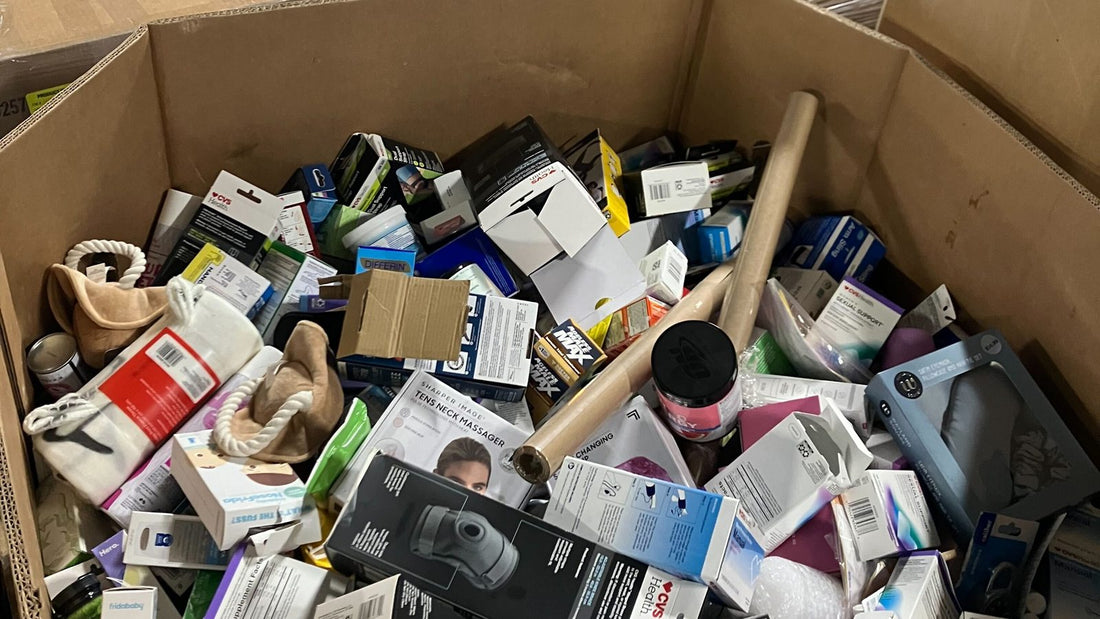
Liquidation vs disposal costs: how to make a net recovery decision
Share
Compare liquidation and disposal of overstocks on net recovery, not on a percentage of retail value. Net recovery is the agreed sale price minus everything it takes to complete the sale. Disposal has its own costs and recovers nothing from the product. When resale leaves you better off than paying to dispose, liquidation is usually the stronger choice.
Why MSRP is the wrong starting point
Retail value describes what a product sells for on a shelf, not what a liquidation buyer will pay for a quantity of it. Buyers price on condition, quantity, demand for the category, sales restrictions and the freight they will carry. On the REMEX submission form, total retail value and target sales price help the review and buyer matching, but they do not set or guarantee a final price.
Asking "what share of MSRP will we get back?" tends to produce disappointment or a stalled decision. Asking "which option leaves us better off?" produces a decision.
Liquidation vs disposal: the net recovery comparison
Put both options on the same basis: what each one does to your cash and your warehouse.
Liquidation side
- Agreed sale price for the inventory
- Minus labor to pull, count and stage the goods
- Minus packing, pallets and wrap
- Minus any transport cost you agree to carry
- Minus storage until pickup
- Minus any other costs agreed in the sale
Disposal side
- Hauling or container fees
- Disposal or destruction charges
- Labor to pull and load the goods
- Documentation, such as certificates of destruction, if you need them
- Storage until the goods leave
Disposal is a pure cost. Liquidation can be a gain, break even or a smaller loss. Even when net recovery is modest, it can beat disposal because you avoid the disposal bill as well.
Time is a cost too
Every week in the warehouse adds storage cost, and many products lose value as seasons change, packaging is updated or shelf life runs down. A decision delayed by a month can change the comparison. Running an excess inventory audit first gives you the counts and condition data needed to compare options quickly.
When disposal is the right answer
Some inventory should not be resold at any price. CPSC guidance quotes federal law that makes it unlawful to sell or distribute consumer products subject to a recall. Unsafe, contaminated or expired goods, and products whose contracts require destruction, belong on the disposal side regardless of the numbers.
The accounting angle
IRS Publication 538 says goods that cannot be sold at normal prices because of damage, imperfections or changes of style should be valued at their bona fide selling price minus the direct cost of disposition. That is close to the net recovery idea above. Ask your accountant how it applies to your inventory and tax year.
The sustainability tie-breaker
When the numbers are close, consider where each option sits in the EPA's waste management hierarchy, which ranks reuse above recycling and places disposal last. Resale keeps a usable product in use and reduces what goes to disposal. That is a specific, checkable outcome, and it is often what moves a close decision. For a full routing approach, see the resale-before-disposal framework.
FAQ
What recovery should we expect as a percentage of MSRP?
There is no fixed percentage. Condition, quantity, category demand, restrictions and freight all move the price, which is why REMEX reviews each submission rather than quoting a rate in advance.
Who pays for transport in a liquidation sale?
It depends on the sale. With REMEX, timing, transport costs and responsibilities are agreed with you for each transaction, and pickup or delivery is arranged after settlement.
Next step
Want to see what the resale side of your comparison looks like? Submit your inventory with the condition, quantity, location and any sales restrictions, or email sourcing@remexliquidation.com. If the stock sits in an Amazon or Walmart fulfillment center rather than your own warehouse, the e-commerce removal service is a separate route.
Sources
The facts attributed to the organizations below were checked against these pages. Process steps and checklists in this article are general operational guidance, not legal, tax, accounting or environmental certification advice.