

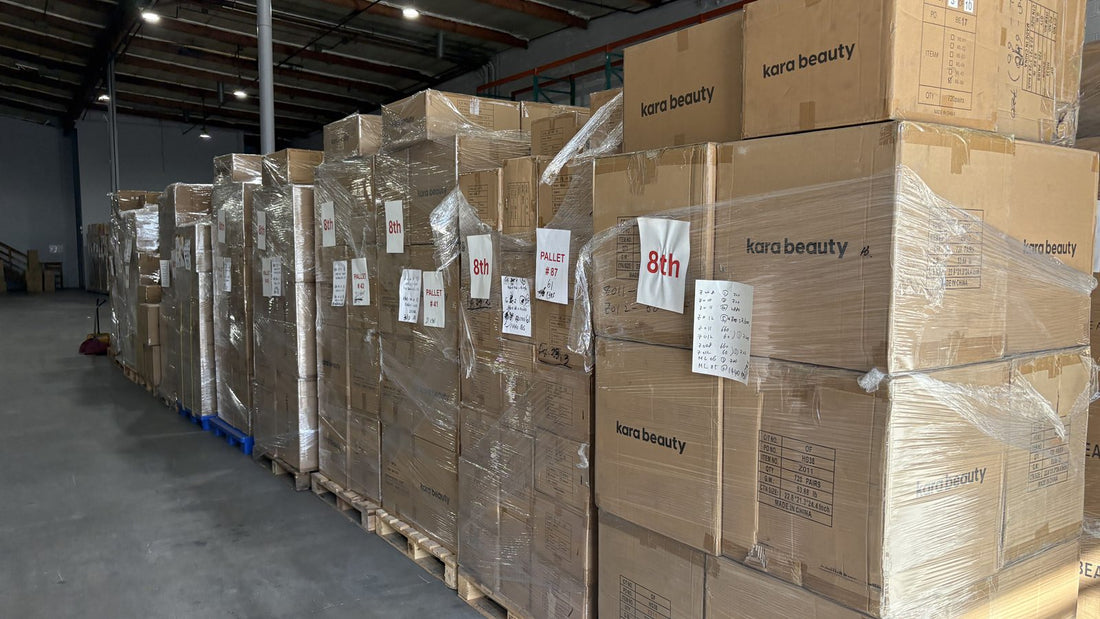
Inventory manifest for buyer review: fields, counts and condition
Share
A buyer-ready inventory manifest lists each SKU with a description, identifier, quantity, pack level, condition and location, plus retail value. Clear counts and honest condition notes reduce follow-up questions, help buyers review overstocks and excess inventory faster and lower the risk of a sale falling apart when the goods are picked up.
The core fields
As general guidance, these columns cover most buyer questions. Use one row per SKU and condition.
| Field | What to enter |
|---|---|
| SKU | Your internal item number |
| Description | Product name, size, color or variant |
| UPC or GTIN | The barcode number on the product |
| Brand | Brand name, or a note if the brand must be hidden in listings |
| Category | For example beauty, apparel, home, electronics |
| Quantity | Units, plus units per carton and cartons per pallet |
| Condition | One fixed term per row |
| Expiry or batch code | For dated or regulated products |
| Unit retail price | MSRP per unit, in one currency |
| Location | City and state or country of the warehouse |
Counts buyers can trust
- State the pack level for every quantity. "40" means little until you say units, cartons or pallets.
- Reconcile totals so the row counts add up to the summary figure.
- Mark estimates as estimates, and say how they were made.
- List mixed pallets separately, with a rough breakdown of what is on them.
- Recount before pickup if stock has moved since the manifest was made.
Condition terms that mean the same thing to everyone
Condition causes more disputes than any other field. Use fixed terms and define them once at the top of the file.
- New or sealed: original packaging, never opened.
- Open box: packaging opened, product believed complete.
- Customer returns: returned by end customers; say whether they were tested.
- Shelf-pulls: removed from retail display, may show handling wear.
- Damaged packaging: product intact, outer packaging marked or crushed.
- Short-dated: sellable, with limited time before the date on pack.
- Closeouts or discontinued: no longer in your active range.
When in doubt, grade down rather than up. A buyer who receives better goods than described is rarely a problem.
Identifiers and safety checks
GS1 US explains that a GTIN is a globally unique number identifying a trade item, and that the GTIN-12 is the number encoded in a UPC-A barcode. Including it lets buyers check the exact product. The CPSC states that it is illegal to sell any recalled product and recommends checking its recall listings before offering products for resale, so screen the manifest before you share it. The excess inventory audit checklist covers this step in more detail.
Format and attachments for a REMEX review
REMEX accepts an inventory list as XLSX, XLS, CSV or PDF up to 10 MB, or as a link. Photos or a short video of pallets, labels and packaging are optional but help the review. If you do not have a list yet, a written description is enough to start. Retail value and target price help the review, and the net recovery comparison explains why neither sets the final price.
FAQ
Do buyers need unit-level detail for mixed pallets?
Not always, but more detail usually means fewer questions. A category breakdown with approximate counts and photos is a practical middle ground.
Should the target price go on the manifest?
Keep it separate. On the REMEX form, the target sales price is its own field and is used for review and buyer matching.
Next step
Have a manifest, or just a description? Submit your inventory with the condition, quantity, location and any sales restrictions, or email sourcing@remexliquidation.com. If the stock sits in an Amazon or Walmart fulfillment center rather than your own warehouse, the e-commerce removal service is a separate route.
Sources
The facts attributed to the organizations below were checked against these pages. Process steps and checklists in this article are general operational guidance, not legal, tax, accounting or environmental certification advice.