
Amazon FBA
Amazon FBA return grading settings: plan for unsellable units
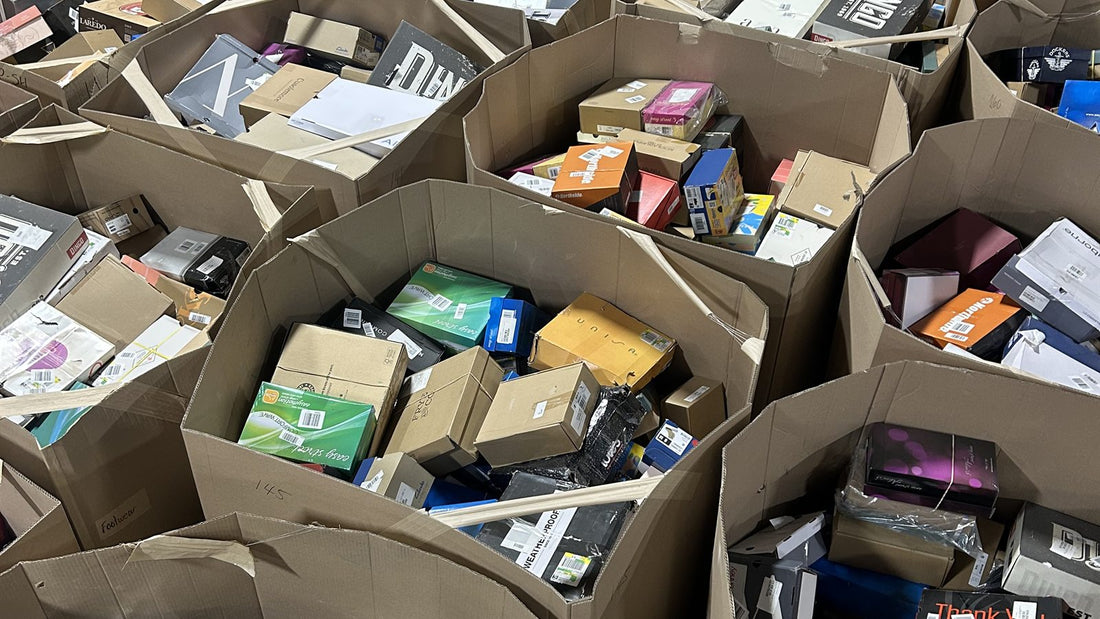
Amazon now lets FBA sellers tell it what "sellable as new" means for their own products. The customized grading option, announced in Seller Central News on October 19, 2026, arrives a few weeks before the heaviest returns period of the year. This article is for Amazon FBA sellers (and Walmart WFS sellers with the same problem) who want to decide now which returned units go back on sale, which become unsellable, and where the unsellable units go in January.
What customized grading changes, and what it does not
You submit criteria by category: seal and packaging, included accessories, product authenticity indicators, device capabilities, and other requirements. Rules can apply to specific ASINs, your whole catalog, or a CSV upload. You can also set instructions for restoring items to new or reselling them as used, including used-price percentages by condition. The settings live under Customized grading settings in Seller Central, according to Amazon's announcement.
Two limits matter. Amazon uses your input "as guidance" alongside its standard process and programs such as Grade and Resell, so it is not a promise of a particular grade. ASINs not covered by a rule keep the default process.
The practical effect is that you can move the line between sellable and unfulfillable in both directions. A tighter rule for a sealed skincare item pushes more returns into the unfulfillable pool; a looser rule for a hard-goods item that is fine without its retail sleeve keeps more units on sale. The number of unsellable units you face after the holidays is now partly your decision.
Why December and January are the real test
Returns are large and concentrated. The National Retail Federation and Happy Returns estimated on October 15, 2025 that 15.8% of annual retail sales would be returned in 2025, about $849.9 billion, with 19.3% of online sales returned, and retailers expected about 17% of holiday sales to come back. If your FBA returns follow that pattern, the units landing in the unfulfillable bucket from late December to mid-January are a meaningful share of your year.
Costs are higher in that window. Amazon's holiday peak fulfillment fees apply from October 15, 2026 to January 14, 2027 for FBA, Remote Fulfillment with FBA, Multi-Channel Fulfillment and Buy with Prime, averaging $0.32 more per unit than non-peak rates, plus the 3.5% fuel and logistics surcharge, according to Amazon's July 2026 holiday update. Units graded sellable go back into stock at peak demand. Units graded unfulfillable follow your automated settings, and if you have not set those, Amazon decides.
Check your automated unfulfillable settings before the returns wave
Amazon's US help page "Remove inventory automatically" is clear on the default. Automated unfulfillable settings are enabled by Amazon and cannot be turned off. If you do not configure a removal preference, unfulfillable items are disposed of at Amazon's earliest discretion based on capacity, including immediately after returns evaluation. A return that fails grading can be gone before you see it in a report.
Step 1: Decide the required removal option
The settings require Return or Dispose. Return sends units to an address you provide; Dispose destroys them. With immediate disposal, Amazon states that unsellable returns are disposed of right after returns evaluation and appear only in the FBA customer returns report.
Step 2: Add value recovery services where they fit
The same page lists optional value recovery services that run before the required removal: Refurbishment, Grade and Resell (enrolled ASINs are relisted as used), and Liquidation. You can combine any of these with Return or Dispose, or use the required option alone.
Step 3: Pick the return schedule and a receiving address that can handle it
For Return, Amazon processes removals weekly (8th, 15th, 22nd and 28th) or twice a month (5th and 20th). Per-unit removal fees apply. Make sure someone can receive and inspect mixed cartons in January, because Amazon's grade and yours will not always agree.
Step 4: Write the grading rule last, not first
Once you know where unfulfillable units go and what they cost, write the grading criteria. Start with ASINs where the gap between new and used resale value is largest, check outcomes for a few weeks, then expand by CSV.
The December 18 rule for seller-fulfilled returns
If you also ship some orders yourself, a separate change lands mid-peak. In an email reproduced by sellers on the Amazon Seller Forums in October 2026, Amazon said that from December 18, 2026, all US returns for seller-fulfilled orders, excluding heavy and bulky items, require a prepaid return shipping label. Address-only labels that make the customer pay return shipping no longer qualify, except temporarily for heavy and bulky items.
Within seven calendar days of a return request you must either upload a prepaid label in the Manage seller-fulfilled returns workflow or issue a full refund without requiring the item back. Otherwise, Amazon says, a returnless refund may be issued automatically and deducted from your account. Labels sent through Buyer-Seller Messaging do not count.
For inventory planning: seller-fulfilled returns will come back to your warehouse more consistently, so they need a grading and resale path too. Low-value items where the label costs more than the product may become returnless refunds, so do not count them as inventory. Walmart WFS sellers face the same question for units WFS marks unsellable: decide the destination before the volume arrives.
A simple plan for the graded-out units
| Grading outcome | What happens by default | What to decide now |
|---|---|---|
| Sellable as new | Returns to FBA stock, sold at peak fees through January 14, 2027 | Whether your rule should restore more units to new (seal, accessories, packaging) |
| Sellable as used | Relisted through Grade and Resell if enrolled, at your used-price percentages | Which ASINs and which used-price percentages by condition |
| Unfulfillable | Automated unfulfillable settings apply; with no preference set, disposal at Amazon's discretion | Return or Dispose, which value recovery services, which schedule, which address |
| Returned to you | Mixed cartons arrive on the chosen schedule | Who inspects and where the units are resold outside Amazon |
The last row is where many sellers stall. Graded-out units are still inventory with a cost on the books, mixed by condition and SKU. Selling them in bulk to a buyer that inspects and resells through other channels is often cleaner than holding them into the second quarter.
Where REMEX fits
For Amazon FBA and Walmart WFS sellers, REMEX's E-commerce Removal service receives removal shipments directly, inspects the units, and resells them. The seller receives 70% of the actual resale proceeds (not MSRP) after REMEX's 30% service fee and any other agreed costs. Proceeds from a month's sales are settled on the 15th of the following month, and unsold units are not included. This fits the Return option in your automated unfulfillable settings and deliberate removal orders for aged or excess inventory.
If the returns have already landed in your own warehouse, submit them through the Sell to us form with condition, quantity, location, total retail value, target sales price and any sales restrictions. REMEX aims to review within 24 hours. A review is not an offer and does not guarantee a price or sale; settlement follows the agreed terms, and pickup or delivery is arranged after settlement.
FAQ
Does customized grading mean Amazon will grade exactly as I ask?
No. Amazon describes your criteria as guidance used alongside its standard process and programs such as Grade and Resell, and ASINs without a rule keep the default process. Check outcomes before relying on it for the whole catalog.
What happens to an unfulfillable return if I never touched the automated settings?
Per Amazon's US help page, the settings are enabled and cannot be disabled, and without a removal preference units are disposed of at Amazon's earliest discretion, including immediately after returns evaluation. Set Return or Dispose yourself.
Can graded-out FBA returns go straight to REMEX?
Yes. Removal shipments can be addressed to REMEX under the E-commerce Removal service, where units are inspected and resold, with 70% of actual resale proceeds settled on the 15th of the following month. Contact sourcing@remexliquidation.com before the first shipment so receiving details are set up.
Next step
Set your automated unfulfillable settings and grading rules before holiday returns arrive, then decide the destination for everything that grades out. For FBA or WFS removal shipments, see E-commerce Removal. For returns and overstocks already in your own warehouse, Submit your inventory. Questions: sourcing@remexliquidation.com.
Sources
This article is general operational guidance for inventory businesses, not legal, tax or accounting advice. Platform policies change; confirm current terms in Seller Central before acting.
- Amazon Seller Central News: Customize how your FBA returns are graded for resale (October 19, 2026)
- Amazon Seller Central Help: Remove inventory automatically (US)
- Amazon Seller Forums: Seller-fulfilled returns to require prepaid labels as of Dec 18 (Amazon email reproduced by sellers, October 2026)
- Amazon Seller Central News: Holiday 2026: Same fees, same eligibility, earlier deadlines (July 2026)
- National Retail Federation and Happy Returns: Consumers expected to return nearly $850 billion in merchandise in 2025 (October 15, 2025)
Have inventory like this?
Share your inventory details, target price and sales requirements.
Sell your inventory →