
Amazon FBA
Amazon FBA storage fees: a monthly removal decision for 2026
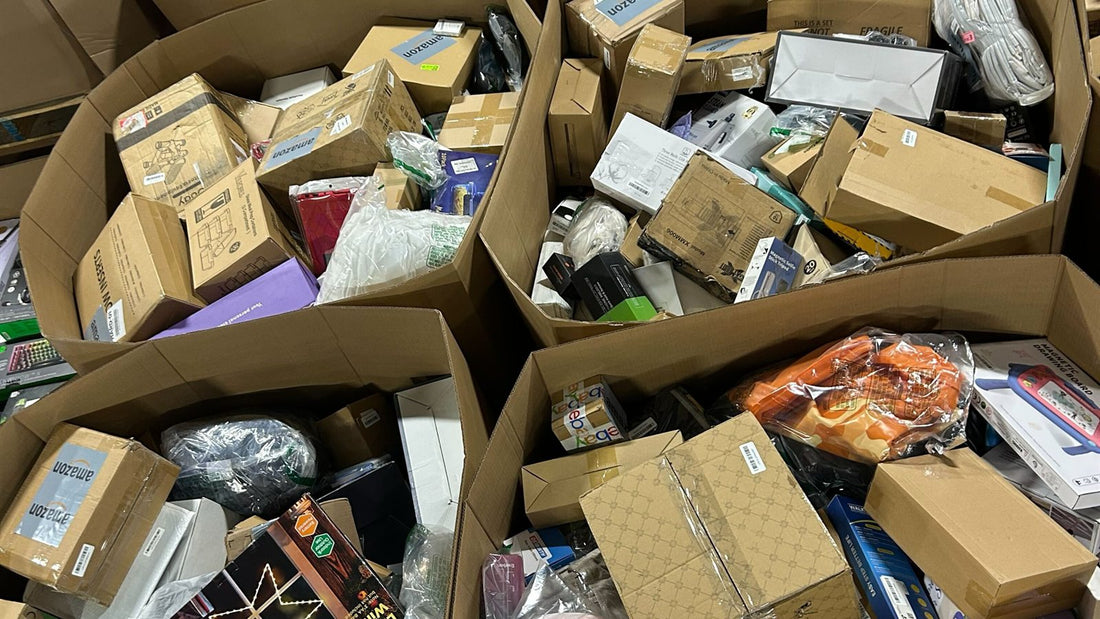
Amazon FBA storage fees turn excess inventory into a calendar decision. For U.S. sellers reviewing 2026 overstocks, compare the cash from another month in FBA with a price cut, removal to a reseller, or disposal. The question is not whether inventory once had value. It is whether waiting earns more than it costs.
The 2026 fee calendar, month by month
Amazon's October 15, 2025 announcement set January 15, 2026 as the default effective date for its annual changes. The aged-inventory revision has a separate January 16 date. These are U.S. rules; confirm live account rates before acting.
- January: Base storage returns to off-peak. The January 15 age assessment precedes the January 16 surcharge revision; do not apply the new tiers retroactively.
- February: The February 15 assessment is the first regular monthly checkpoint after that revision. Review holiday leftovers before the cutoff.
- March: From March 1, new removal/disposal orders are charged per unit as processed, according to Amazon's revised announcement.
- April: Recalculate contribution margins. Goat Consulting's 2026 summary reports a 3.5% fulfillment-fee surcharge effective April 17, separate from storage.
- May: Project spring inventory into its next age band.
- June: Compare summer sales forecasts with the cost of another assessment.
- July: Identify inventory likely to remain through October.
- August: Test markdowns with a defined end date.
- September: Decide which excess units justify peak-season space.
- October: Peak monthly storage begins October 1, not midmonth.
- November: Keep promotional sell-through forecasts separate from optimistic holiday targets.
- December: Plan January removals before returns and receiving work crowd the calendar.
May through September are planning checkpoints, not new fee announcements. Every month, Amazon's February 2026 action plan says age is assessed on the 15th and charged between the 18th and 22nd. Its removal cutoff is 11:59 p.m. Pacific Time on the 14th. Set an earlier internal deadline and retain confirmation.
Read the fee stack and Inventory Age report together
Goat Consulting's 2026 rate-card summary lists non-dangerous-goods base storage per cubic foot: standard-size $0.78 January-September and $2.40 October-December; oversize $0.56 and $1.40 respectively. Base storage uses average daily volume, so a late-month exit does not erase earlier occupancy.
Amazon's action plan lists these monthly aged-inventory surcharges effective January 16, 2026, additional to base storage:
- 181-210 days: $0.50 per cubic foot.
- 211-240 days: $1.00; 241-270 days: $1.50.
- 271-300 days: $5.45; 301-330 days: $5.70; 331-365 days: $5.90.
- 366-455 days: the greater of $6.90 per cubic foot or $0.30 per unit.
- 456+ days: the greater of $7.90 per cubic foot or $0.35 per unit.
Amazon excludes clothing, shoes, bags, jewelry and watches from the first three bands. Do not extend those exclusions to older bands.
Build a usable report
Open FBA Inventory, sometimes described as Inventory Age or Manage Inventory Health, and export the current report. Keep ASIN, seller SKU/FNSKU, available quantity, age buckets, packaged volume and recent sales together. Amazon says its tool flags inventory facing surcharges within 60 days. A broad age bucket may straddle fee bands; use detailed age estimates rather than assigning its entire quantity one rate. Reconcile previous charges with the Aged Inventory Surcharge report.
Goat's 2026 summary also describes a storage utilization surcharge above 22 weeks, generally for established Professional sellers averaging at least 25 cubic feet, excluding inventory aged 0-30 days. New-seller and other exemptions matter. Its January 15 low-inventory change measures seller-FNSKU supply, with eligible items exposed when both historical supply measures fall below 28 days. Clearing a healthy replenishment SKU can create a different fee problem.
Capacity is another constraint. Amazon's system, effective March 1, 2023, uses monthly cubic-foot limits covering on-hand inventory and open inbound shipments. IPI, forecasts and network capacity influence limits. Check your current IPI threshold and Capacity Monitor; do not assume an old numerical cutoff promises unlimited space.
Compare four actions using forward cash
Marketplace Pulse reported on April 16, 2026 that 49% of surveyed Amazon-active sellers identified marketplace fees as their primary margin concern. That supports SKU-level analysis, not a universal liquidation recovery estimate. Treat original purchase cost as sunk for this forward decision.
| Action | Choose when | Include in the calculation |
|---|---|---|
| Hold | Credible future contribution beats waiting costs | Storage, age/utilization charges, returns, cash delay and capacity |
| Price cut | Demand responds before the next checkpoint | Net proceeds after fulfillment, referral fees, promotions and returns |
| Remove to reseller | Off-platform net recovery beats holding | Removal, receiving, Inspection, service fees and unsold inventory |
| Dispose | No safe, permitted resale route has positive net recovery | Disposal fee and compliance requirements; no resale proceeds |
Illustrative example: seller assumptions, not market averages
Assume 100 standard-size units occupy 0.10 cubic foot each and will all remain for one full October at age 280 days. Using the cited 2026 rates, base storage is 100 × 0.10 × $2.40 = $24. One 271-300-day surcharge is 100 × 0.10 × $5.45 = $54.50. Together: $78.50, before any utilization surcharge.
Assume selling all units afterward produces $500 after selling costs but before that holding bill: forward cash is $421.50. An immediate markdown producing $450 net wins. Alternatively, assume eventual reseller proceeds of $600, a 30% service fee, $84 removal and $20 agreed costs: $316 remains. Disposal at an assumed $84 produces negative $84. These are seller-chosen scenarios, not forecasts; change sell-through, timing and condition assumptions and rerun the comparison.
Prepare removals before the cutoff
Create a removal order for selected quantities to an approved receiving address, then retain its ID and monitor processing. Amazon's February 2026 guidance says processing may take up to 14 business days and storage fees stop while the order processes. Do not promise a receiving date from that estimate. Plan for separate deliveries, reconcile arrivals against the order, and do not treat requested quantities as received counts.
Budget the current size/weight-based removal or disposal fee. Goat's January 15, 2026 summary lists $0.84 for standard-size units up to 0.5 lb; that is not a universal rate. Amazon's March 1 billing change affects timing, not rates.
- Send ASIN/FNSKU lists, quantities and sellable/unfulfillable condition splits.
- Identify customer returns, damaged packaging, missing accessories and testing needs; confirm actual condition through Inspection.
- Disclose brand, channel, territory and resale restrictions, plus safety or expiry concerns.
- Agree receiving instructions, tracking reconciliation and handling of shortages or unsold units before dispatch.
Where REMEX fits
For Amazon FBA or Walmart WFS removals, E-commerce Removal receives shipments, inspects and resells. Sellers receive 70% of actual resale proceeds, not MSRP, after REMEX's 30% service fee and any other agreed costs. A month's sales are settled on the 15th of the following month; unsold units are excluded.
Own-warehouse inventory uses Sell to us. Submit condition, quantity, location, total retail value, Target sales price and restrictions. REMEX aims to review within 24 hours; review is not an offer and does not ensure a price or sale. Settlement follows agreed terms, with pickup/delivery after settlement.
FAQ
Does January eliminate aging charges?
No. Off-peak base storage does not reset inventory age.
Must removals arrive before the 15th?
Amazon's cited guidance ties surcharge avoidance to timely order submission, not arrival. Keep confirmation.
Is the example a REMEX quote?
No. Recovery depends on actual sales, condition and agreed costs.
Next step
Export your age report and calculate the next checkpoint. Submit your inventory, review E-commerce Removal, or email sourcing@remexliquidation.com.
Sources
General operational guidance, not legal, tax or accounting advice. Confirm current U.S. fees and account eligibility in Seller Central.
- Amazon Selling Partners: Update to U.S. Referral and Fulfillment by Amazon fees for 2026
- Amazon Seller Forums: Aging inventory action plan
- Amazon Seller Forums: FBA removal and disposal fees to be charged as units are processed
- Amazon: New streamlined FBA capacity management system
- Goat Consulting: 2026 Amazon FBA fee changes
- Marketplace Pulse: The paradoxical dependence of Amazon and its sellers
Have inventory like this?
Share your inventory details, target price and sales requirements.
Sell your inventory →