
Excess inventory
Walmart WFS peak storage fees: a November keep-or-remove check
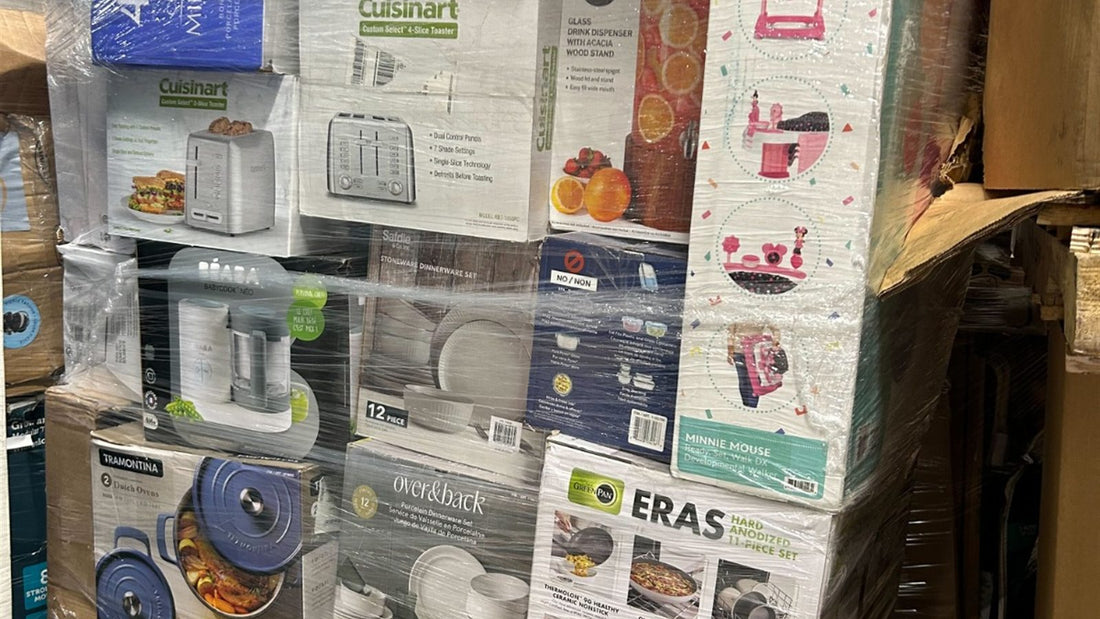
Walmart WFS storage costs the same in November as in March, unless a unit has been in a fulfillment center for more than 30 days. During the October to December peak that threshold adds $1.50 per cubic foot per month on top of the $0.75 base, per Walmart's WFS fees guide (updated May 27, 2026). This article is for WFS sellers deciding in mid-November which excess inventory to keep for the holiday rush and which to pull out before it ages into 2027, with a note for Amazon FBA sellers on the same calendar.
How the WFS peak storage math works
Walmart's published schedule (May 27, 2026 update) has three parts:
- January to September: $0.75 per cubic foot per month.
- October to December (peak): $0.75 per cubic foot per month for items stored up to 30 days, plus $1.50 per cubic foot per month for items stored more than 30 days.
- Items stored more than 365 days, effective June 30, 2026: $2.25 per cubic foot per month for 366 to 450 days, and $7.50 beyond 450 days.
Unit cubic feet are length times width times height in inches divided by 1,728; the Inventory Health report's Cube Used column shows the figure per item.
A worked illustration
Take 500 units of one SKU at 0.2 cubic feet each (roughly a 7-inch cube), or 100 cubic feet in WFS, at published rates with no proration or promotions:
- Base rate only (units under 30 days): $75 per month, $225 for October through December.
- Units past 30 days for the whole peak: $2.25 per cubic foot, $225 per month, $675 for the quarter.
- Difference: $450 for the quarter, about $0.90 per unit. At the full peak rate, storage runs $0.45 per unit per month.
The add-on triples the monthly bill for anything that arrived before October, yet per unit the figure stays modest. Whether the unit sells before demand drops in January matters more than the fee itself.
The 2026 waiver question
Walmart's 2026 holiday logistics checklist tells WFS sellers to take advantage of zero peak-season storage fees, and Uncapped's October 14, 2026 review notes Walmart waived the peak premium from October 1 to December 31, 2025, while the fee schedule still lists the add-on. Check your October fee statements before assuming either way. A waiver shrinks the peak math, but the aging clock and January's storage bill do not stop.
A SKU triage for the week of November 14
Two dates frame the next six weeks: Cyber Monday on November 30, 2026, sixteen days out, and Tuesday December 15, after which late-December demand depends on shipping promises rather than inventory depth. Pull the Inventory Health report (Seller Center, WFS, Reports) and use the columns Walmart describes in its May 20, 2026 report guide: Available Units, Last 30 days units sales, Sell Through Rate (units shipped in 90 days divided by average units stored; 1.0 to 1.5 is good, 0.75 or below is below average), Days of supply, Surplus Units (more than 180 days of supply against Walmart's forecast) and Cube Used. Sort every WFS SKU into three groups, treating these thresholds as a starting point to adjust for your category:
- Sells out by Cyber Monday. Last-30-day sales cover the units on hand, or days of supply is under 20. Leave these alone.
- Sells by December 15 with help. Sell-through is average and days of supply sit between 20 and 45. Adjust price now, not after Thanksgiving, and review again on December 15; units still there move to group three.
- Will not sell by December 15. Surplus Units is above zero, sell-through is below 0.75, or last-30-day sales are near zero. Decide now whether a markdown clears them or removal is the better use of cash.
What removal costs
Walmart's fees guide lists disposal at $0.35 per unit for items up to 2 pounds, and removal (shipped back to you) at the disposal fee plus $0.40 per pound. A 1-pound unit costs about $0.75 to get back; the 500-unit example about $375 plus receiving on your end. Carrying the same 100 cubic feet to spring instead costs roughly $300 for January through April at the off-peak rate, on top of peak charges already paid, and the resale value is unlikely to rise while you wait.
The aging timeline: a June 2026 receipt
Walmart tracks age from the First In Stock Date in buckets from ATS 0-90 days up to 450+ days. Follow one unit first in stock on June 15, 2026:
- November 14, 2026: day 152, with five months of storage paid, October and November at the peak rate unless the waiver applies.
- December 12, 2026: day 180. The next day it moves to the 181-270 bucket. No new Walmart fee yet, but the holiday window is closing.
- June 15, 2027: day 365. From June 16, 2027 the $2.25 per cubic foot tier applies.
- September 8, 2027: day 450. From the next day the rate is $7.50 per cubic foot per month, ten times the base rate.
The question is whether anything in the first quarter of 2027 will make that unit sell faster than it did in October and November. For seasonal and gift items the answer is usually no, since demand falls after December. If the unit is in group three today, decide its exit before the end of December, while a holiday-driven resale market still exists.
Amazon FBA sellers: same logic, different dates
Amazon runs on the 15th instead of a 30-day peak rule. Per Amazon's aging inventory action plan on Seller Forums (February 2026), the aged inventory surcharge applies to units stored 181 days or longer, is assessed from a snapshot on the 15th of each month, and is charged between the 18th and 22nd on top of monthly storage. Removal or disposal orders submitted by 11:59 p.m. Pacific Time on the 14th exempt those units even if they have not physically left. In 2026 the November deadline is Saturday November 14 and the December deadline is Monday December 14. A unit received in mid-June 2026 crosses 181 days in mid-December, so the December 15 snapshot is the first that charges it. Amazon also confirmed in July 2026 that holiday peak fulfillment fees run October 15, 2026 through January 14, 2027, averaging $0.32 per unit over non-peak rates. Run the same three-group triage on your FBA inventory age data and treat the 14th as decision day.
Where REMEX fits
For Amazon FBA and Walmart WFS sellers, REMEX's E-commerce Removal service receives removal shipments, inspects the units, and resells them through its network of 4,000+ buyers. The seller receives 70% of actual resale proceeds, not MSRP, after REMEX's 30% service fee and any other agreed costs. Proceeds from a month's sales are settled on the 15th of the following month, and unsold units are not included.
For excess inventory in your own warehouse, submit it through the Sell to us form with condition, quantity, location, total retail value, target sales price and any sales restrictions. REMEX aims to review within 24 hours. A review is not an offer and does not guarantee a price or sale; settlement follows agreed terms, with pickup or delivery after settlement.
FAQ
Does the 30-day peak add-on apply to units that arrived in September?
Under the published schedule, yes: a unit stored more than 30 days during October to December is charged the add-on, so September arrivals are affected from October onward. Confirm on your fee statements whether the 2026 waiver changes that for your account.
Is it better to dispose of units at Walmart than to remove them?
Disposal is cheaper per unit but ends any recovery. Removal costs the disposal fee plus $0.40 per pound and keeps the units available for resale, which keeps the option of recovering value open.
What if my excess inventory is spread across many small SKUs?
Group them by exit date rather than by SKU. Everything that will not sell by December 15 can go out as one removal plan, so a buyer can review the full assortment at once.
Next step
Run the triage this week, then decide what leaves WFS before January. E-commerce Removal handles Amazon FBA and Walmart WFS removal shipments; Submit your inventory covers excess inventory in your own warehouse. Questions go to sourcing@remexliquidation.com.
Sources
This article is general operational guidance based on published platform pages as of early November 2026, not legal, tax or accounting advice. Confirm current rates in Seller Center before acting.
- Walmart Marketplace Learn: WFS fees (updated May 27, 2026)
- Walmart Marketplace Learn: WFS reports, Inventory health (updated May 20, 2026)
- Walmart Marketplace: Your logistics checklist for holiday success (2026 holiday season)
- Uncapped: Walmart Marketplace Q4 fees, how peak-season WFS costs hit your cash flow (October 14, 2026)
- Amazon Seller Forums: Aging inventory action plan (February 2026)
- Amazon Seller Forums News: Holiday 2026, same fees, same eligibility, earlier deadlines (July 2026)
Have inventory like this?
Share your inventory details, target price and sales requirements.
Sell your inventory →