
Excess inventory
Warehouse space for December: clear aged SKUs before returns arrive
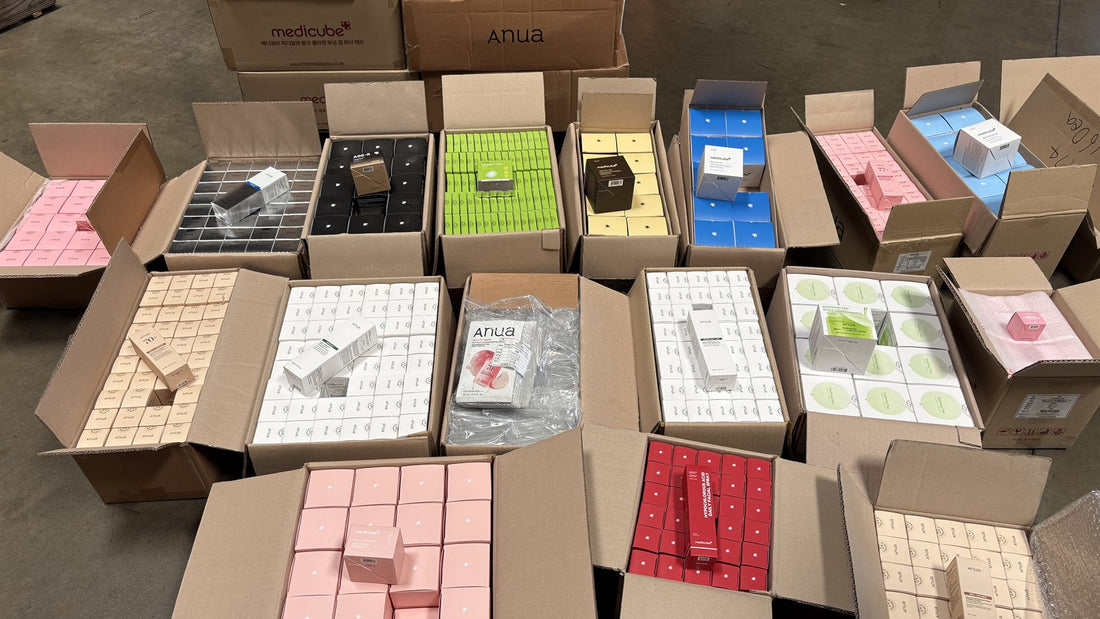
If you run your own warehouse, the next ten weeks decide whether December and January are manageable or chaotic. Holiday returns begin arriving in late December, early 2027 receipts follow in January, and the September 2026 Logistics Managers' Index (released October 6, 2026) shows U.S. warehousing capacity contracting at its sharpest rate since March 2022. This article is for brands, retailers, distributors and 3PL owners who hold excess inventory on their own racks: what the space data says, how to find the aged SKUs occupying space you will need, and how to make a clear-or-keep decision before Thanksgiving on November 26.
What the latest warehouse data says
Three reports published in October 2026 point the same way: storage is getting tighter and more expensive, and the squeeze is sharper for smaller operators.
- Logistics Managers' Index, September 2026 (released October 6). The Warehousing Capacity reading fell 14.2 points to 39.3, which the authors describe as the sharpest contraction in four and a half years. Warehousing Utilization rose to 64.3, Warehousing Prices stayed in robust expansion at 73.5, and Inventory Costs reached 79.9. Firms with fewer than 1,000 employees reported capacity contracting at 36.0 versus 44.1 for larger firms. The report notes that much of the new inventory was still sitting at the wholesale level in September, ahead of the usual mid-October hand-off to retailers.
- Cushman & Wakefield Q3 2026 U.S. Industrial MarketBeat (October 12). National industrial vacancy declined to 6.8%, the lowest since year-end 2024, and annual asking rent growth reached 4%. The firm expects vacancy to tighten modestly further by year-end.
- CBRE Q3 2026 U.S. Industrial & Logistics report (October 23). Vacancy fell 20 basis points year-over-year to 6.4%, availability fell to 8.9%, and average net asking rent rose 3.6% to $11.16 per square foot.
The practical reading: overflow space in December will cost more than a year ago and may not be available where you want it. Space inside your own four walls is capacity you already pay for, and aged SKUs are often the quickest way to free it.
Why the next ten weeks are different
Inbound pressure is easing while outbound and reverse flows are about to spike. NRF's Global Port Tracker (October 8, 2026) forecasts November imports at 2.0 million TEU, down 1% year-over-year, and December at 2.02 million TEU, up 0.6%. NRF's Jonathan Gold said most holiday merchandise has already arrived and the rest of the year is "last-minute replenishment and preparation for early 2027."
That means the goods are already in the system, and for many businesses they are already in the building. What arrives next is returns. In a B-Stock survey published March 24, 2026, 50% of retailers reported allocating up to 25% of total warehouse space to returned, excess and obsolete inventory, and clearing excess inventory quickly ranked as their second-highest priority behind recovery pricing. If a quarter of your floor holds inventory that is not selling, the late-December returns wave lands on top of it.
The calendar is tight. Thanksgiving is Thursday, November 26, Cyber Monday is November 30, and December 1 falls on a Tuesday. Carriers, 3PLs and buyers slow down between Christmas and New Year, so a pickup that is not arranged by early December may slip into January.
A four-step space audit you can run this week
You need a pallet count, your inventory aging report and one afternoon.
Step 1: Count what the aged inventory physically occupies
Export on-hand quantities with last receipt and last sale dates. Flag everything with no sale in 180 days, or the threshold that fits your category. Then walk the floor and count pallet positions, not units. A SKU with 200 units in two totes is not the problem; a SKU with 40 cases across six pallet positions is.
Step 2: Estimate the space you will need
Add up three demands: expected returns for December through January (last year's returns as a share of holiday sales), inbound receipts already on purchase orders for January and February, and staging space for outbound peak. Compare the total with your open positions. The gap is what aged SKUs must give up.
Step 3: Sort aged SKUs into three groups
- Keep: seasonal SKUs with a defined sell window in the next 90 days and healthy margin.
- Mark down in channel: SKUs that move at a lower price without damaging the brand or the channel relationship.
- Sell in bulk: everything else, especially discontinued items, broken case packs, prior-season packaging and short-dated goods where remaining shelf life still permits resale.
Step 4: Prepare one submission for the bulk group
List SKU, description, quantity, condition, packaging, location, total retail value, target sales price and any sales restrictions (channel, territory, brand rules). Add a few photos per pallet. An incomplete submission can go back and forth and risks missing the December window.
What holding costs versus clearing
A simple comparison, with every assumption stated so you can swap in your own numbers.
Assumptions: a 50,000 square foot leased warehouse; 15% of the floor (7,500 square feet) occupied by aged SKUs; an all-in occupancy cost of $12 per square foot per year, which sits a little above CBRE's Q3 2026 average net asking rent of $11.16 because it includes taxes, insurance and utilities; aged inventory at cost of $180,000; no labor or insurance on the goods counted.
| Option | Space cost over 3 months | Cash in hand | Positions freed before December returns |
|---|---|---|---|
| Hold through January and revisit | 7,500 sq ft x $12 / 12 x 3 = $22,500 | $0 | None |
| Mark down in channel over 3 months | Declining as units sell; roughly $11,000 to $15,000 if a third of the units sells each month | Depends on sell-through and markdown depth | Partial, late |
| Bulk sale in November | Close to $0 after pickup | Recovery on $180,000 at whatever price is agreed | All of them |
Bulk does not always win. The point is that space has a monthly cost that aging reports hide, and that cost rises when outside capacity is tight, as the LMI and brokerage reports suggest. Run the table with your own figures, then set a rule: any aged SKU that cannot earn back its space cost through markdown in the next 90 days goes to the bulk group.
Where REMEX fits
REMEX buys excess inventory, overstocks and returns from businesses that hold stock in their own warehouse. Submit through the Sell to us form with condition, quantity, location, total retail value, target sales price and any sales restrictions. REMEX aims to review within 24 hours. A review is not an offer and does not guarantee a price or sale. If terms are agreed, settlement follows those terms, and pickup or delivery is arranged after settlement.
If part of your aged inventory sits in Amazon FBA or Walmart WFS rather than your own building, the E-commerce Removal service receives removal shipments, inspects and resells them, and the seller receives 70% of actual resale proceeds after REMEX's 30% service fee and any other agreed costs, with unsold units not included.
FAQ
What aging threshold should trigger a review?
There is no universal number. A common starting point is 180 days with no sale for general merchandise and shorter windows for seasonal or dated goods. Pick one threshold, apply it monthly, and adjust after two or three cycles rather than debating it SKU by SKU.
Should I wait for post-holiday markdowns to clear aged SKUs?
January markdowns compete with every other retailer's clearance and with the returns you will be processing at the same time. If the SKU is already a year old, waiting adds another quarter of space cost without a clear reason to expect a better price.
How do I estimate the return volume I need space for?
Take last year's late-December and January returns as a share of holiday units sold, apply that share to this year's forecast, and convert units into pallet positions using your typical returns density. With no history, set aside a dedicated returns zone and keep it empty until January.
Next step
Run the four-step audit this week, build the bulk group, and Submit your inventory with condition, quantity, location, total retail value and target sales price. For inventory held at Amazon FBA or Walmart WFS, see E-commerce Removal. Questions about a submission: sourcing@remexliquidation.com.
Sources
This article is general operational guidance, not legal, tax or accounting advice. Figures are taken from the sources below as published on the dates shown.
- Logistics Managers' Index: September 2026 Logistics Manager's Index Report (October 6, 2026)
- Cushman & Wakefield: Modest New Supply and Intensifying Demand Push Vacancy Back Below 7% (Q3 2026 U.S. Industrial MarketBeat, October 12, 2026)
- CBRE: Q3 2026 U.S. Industrial & Logistics Market Report (October 23, 2026)
- National Retail Federation: Import Cargo's Extended Peak Season Wrapping Up (Global Port Tracker, October 8, 2026)
- B-Stock Solutions: Stop Managing the Excess Inventory Backlog. Start Clearing It. (March 24, 2026)
Have inventory like this?
Share your inventory details, target price and sales requirements.
Sell your inventory →