
Amazon FBA
Amazon Outlet, FBA Liquidations or removal: a January 2027 plan
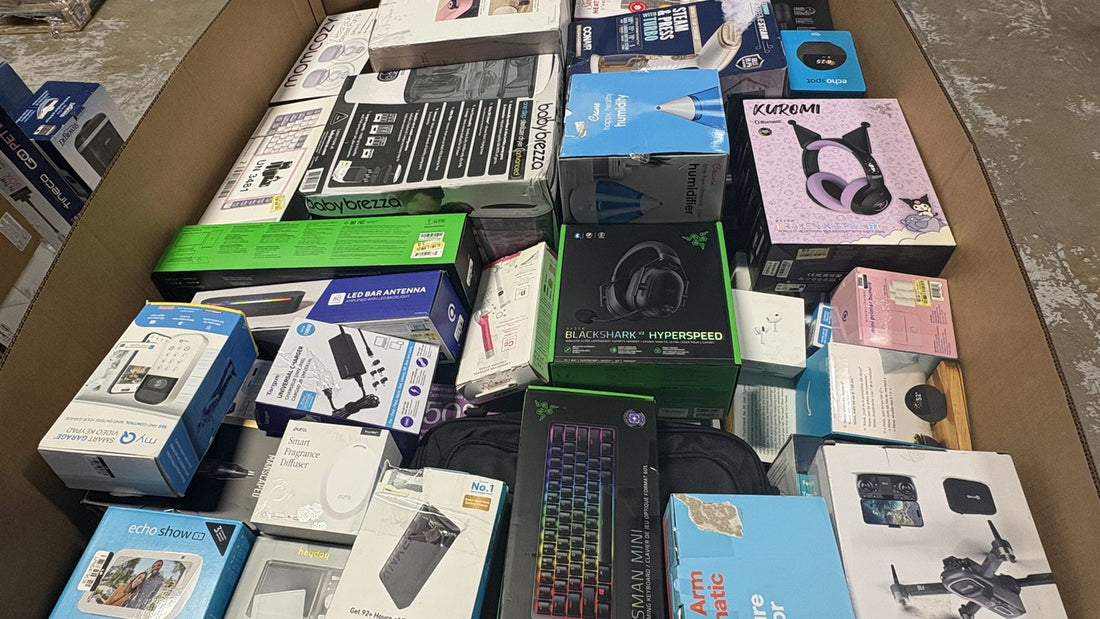
Black Friday is November 27 and Cyber Monday is November 30. Whatever has not sold by mid-December will still be in Amazon fulfillment centers for the January 15 aged-inventory snapshot. This post is for Amazon FBA sellers who want a plan for those units: it compares an Amazon Outlet deal, FBA Liquidations, and removal to an off-platform reseller against the dates between Thanksgiving and mid-January.
The January dates that decide the cost of waiting
- December 14, 11:59 p.m. PT. Amazon's aged inventory surcharge page states that a removal or disposal order submitted before the cleanup date keeps that inventory out of the surcharge even if it has not physically left; the deadline is 11:59 p.m. PT on the 14th.
- December 15 and January 15. The surcharge is assessed from an inventory snapshot on the fifteenth of each month on units stored 181 days or longer, on top of monthly storage, and charged typically between the 18th and 22nd (Amazon Seller Central, read November 2026).
- January 14, 2027. Holiday peak fulfillment fees run from October 15, 2026 to January 14, 2027, with the 3.5% fuel and logistics surcharge on top; Amazon's July 7, 2026 announcement put the increase at an average of $0.32 per unit. Outlet units sold before that date pay the peak rate.
- The 28-day floor. Amazon's 2026 fee page describes a low-inventory-level fee below 28 days of supply. Some sellers inbound extra holiday units to stay above that line, which can leave overstock in January. Amazon also warned in July that peak capacity limits may be lower.
Three exits for an unsold holiday ASIN
Monthly storage fee math was covered in our November 8 post. Here the question is which exit fits an ASIN already judged excess.
Amazon Outlet deal: stay in FBA, sell at a markdown
Per the Amazon Outlet help page (read November 2026), approved deals run for a fixed two weeks, submissions are processed twice per week, and not every submission becomes a deal. The ASIN needs 90 days in fulfillment centers, new condition, a 4-star rating or no reviews, no other deal running, and no Outlet deal in the previous 60 days. Your price must sit at or below a maximum that reflects the lowest new-condition offer. There are no additional deal fees; standard fulfillment and referral fees apply. You cannot cap the quantity. Amazon's aged inventory page describes an Outlet deal as a promotional offer with a minimum discount of 20%.
FBA Liquidations: a contracted liquidator buys the units
Amazon's FBA Liquidations help page and its May 18, 2026 announcement both state that contracted liquidators buy inventory at a gross recovery value of about 5% to 10% of the product's average selling price, before fees. Amazon deducts a 15% referral fee on that gross value plus a per-item processing fee ($0.25 to $0.40 and up for standard-size). Amazon states the net may be negative, the order cannot be canceled, and payment should appear within about 60 to 90 days. Storage and surcharges stop on submission. Expired, Defective and Warehouse Damaged units are ineligible.
Removal to an off-platform reseller
A removal order ships units to an address you choose for Amazon's per-unit removal fee. The return is set by the actual secondary-market sale rather than a fixed percentage of selling price. The cost is time: removal processing can take longer during peak, so plan for a December order to ship in January.
| Question for each ASIN | Outlet deal | FBA Liquidations | Removal to reseller |
|---|---|---|---|
| Who sets the price | You, under Amazon's ceiling and the 20% minimum discount | Contracted rate, about 5% to 10% of ASP before fees | Actual resale by the reseller |
| Fees on the way out | Peak fulfillment fee plus 3.5% and referral fee per unit sold | 15% of gross recovery plus processing fee | Removal fee per unit plus the reseller's agreed fee |
| Quantity control | None for two weeks | You choose; order is final | You choose |
| Cash timing | Normal disbursement as units sell | About 60 to 90 days | After Inspection and resale |
| Best fit | Healthy rating, ceiling near your price | Low-value units with no other buyer | Sellable units worth more than the liquidation range |
A worked example with stated assumptions
These figures are seller assumptions for arithmetic, not market averages or REMEX quotes. Assume 400 unsold units of a standard-size item, 0.4 lb, average selling price $20, with no full-price January sales expected.
- FBA Liquidations. Amazon's own help-page example uses a $20 item at a 7.5% contracted rate: $1.50 gross, less a $0.23 referral fee and $0.25 processing fee, for $1.02 per unit, about $408 for 400 units, paid within roughly 60 to 90 days.
- Outlet deal. With a 20% minimum discount the deal price is at most $16, lower if another new-condition offer sits below you. After referral fee, peak fulfillment fee plus 3.5%, and advertising, the per-unit result should sit well above the liquidation net, but you collect it only on units customers buy within two weeks.
- Removal to a reseller. Assume a removal fee of about $1.50 per unit (check Amazon's current removal fee card for your tier). If the reseller later sells a unit for $5 after Inspection, a 70% share is $3.50, or about $2.00 per sold unit after the removal fee; unsold units earn nothing. The $5 is an illustration only; results depend on condition, brand restrictions and demand.
Outlet wins when discounted demand exists and your rating qualifies. Liquidations is a floor for units with no buyer. Removal fits sellable units when you accept a wait for a share of the real resale price.
Week-by-week checklist, Thanksgiving to January 15
Week of November 23 (Thanksgiving, Black Friday)
- Pull the FBA Inventory report with age bands and lowest new price per holiday ASIN. Flag units reaching 181 days by January 15 and Outlet-eligible ASINs.
Week of November 30 (Cyber Monday)
- Record Cyber Monday sell-through by Wednesday and decide which ASINs are excess at projected January demand.
Week of December 7
- Submit Outlet deals for qualifying ASINs. Create removal or liquidation orders for units you will not keep by December 14, 11:59 p.m. PT, to miss the December 15 snapshot.
Weeks of December 14 and 21
- Check automated removal settings (method, return address, age threshold) and confirm the removal destination with the reseller.
Weeks of December 28 and January 4
- Route returns graded unfulfillable (Customer, Carrier and Distributor Damaged units are liquidation-eligible) and submit the second round of removal orders before January 14.
Week of January 11
- January 14: last day of peak fees; reprice units you keep. January 15: snapshot. Reconcile your surcharge estimate against the charge posted on the 18th to 22nd.
Where REMEX fits
For Amazon FBA and Walmart WFS sellers, REMEX's E-commerce Removal service receives removal shipments, inspects the units, and resells them through its network of 4,000+ buyers. The seller receives 70% of actual resale proceeds, not MSRP, after REMEX's 30% service fee and any other agreed costs. Proceeds from a month's sales are settled on the 15th of the following month, and unsold units are not included.
If the excess is in your own warehouse, use the Sell to us form with condition, quantity, location, total retail value, target sales price and any sales restrictions. REMEX aims to review within 24 hours; a review is not an offer and does not guarantee a price or sale. Settlement follows agreed terms; pickup or delivery follows settlement.
FAQ
Can I run an Outlet deal and a removal order on the same ASIN?
Treat them as separate quantities. Outlet exposes all on-hand units to the deal price, so submit the removal order first, then the remainder to Outlet.
Does a removal order created in December avoid the December surcharge?
Amazon's aged inventory page says an order submitted by 11:59 p.m. PT on the 14th keeps that inventory out of the surcharge. Confirm in your transaction view after the billing window.
Should I liquidate low-value units rather than pay removal fees?
Compare Amazon's liquidation net, which can be negative, against the removal fee and what a reseller could realistically return. For sellable branded units, request a review first.
Next step
Send your January removal plan, with ASIN count and condition mix, to sourcing@remexliquidation.com, or read about E-commerce Removal. Own-warehouse excess can go through Submit your inventory.
Sources
This article is general operational guidance based on the sources below as read in November 2026; it is not legal, tax or accounting advice. Confirm current fees and deadlines in your own Seller Central account.
- Amazon Seller Central: FBA Liquidations
- Amazon Seller Forums (News_Amazon, May 18, 2026): Turn unsold inventory into recovered value
- Amazon Seller Central: Amazon Outlet
- Amazon Seller Central: Aged inventory surcharge
- Amazon Seller Central: 2026 US FBA fulfillment fee changes
- Amazon Seller Forums (News_Amazon, July 7, 2026): Holiday 2026: Same fees, same eligibility, earlier deadlines
Have inventory like this?
Share your inventory details, target price and sales requirements.
Sell your inventory →